


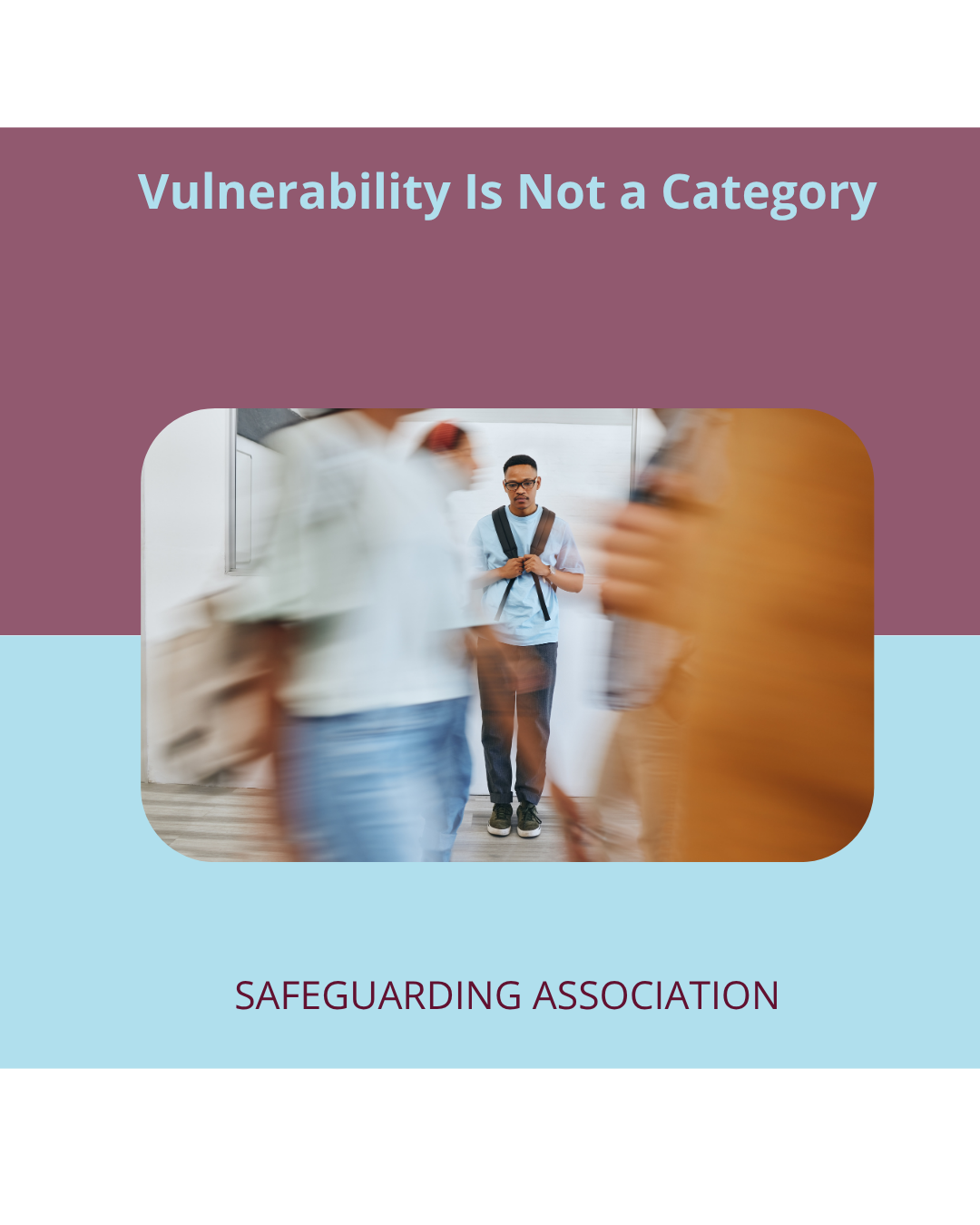
Vulnerability Is Not a Category
Most learners at universities, colleges and apprenticeship providers do not fall into a defined group that calls for specialist safeguarding support. That is an important starting point, and a reassuring one, but it does not mean those learners are never vulnerable.
A learner can be vulnerable without meeting any formal criteria. Low-level anxiety or a difficult relationship can affect how someone copes, yet neither is likely to appear on a list of recognised needs.
Safeguarding arrangements, and the reports governing bodies receive about them, are often organised around defined groups. That structure has real value, because it makes responsibilities easier to assign and support easier to track. Its limitation is that it can only see the learners who fit.
The harder test is whether the institution’s arrangements also reach learners whose vulnerability is less visible, including those who have not been identified and may not see themselves as needing help.
Support needs to be easy to reach without first having to qualify for it. It also depends on staff feeling confident to notice when something is not right, even when there is no label to prompt them.
Categories help institutions organise support. Good governance makes sure that support does not stop at their edges.
0 Comments